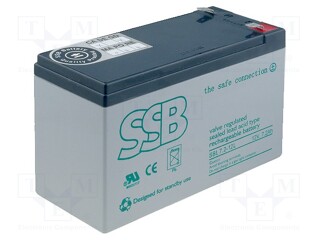
Acid Cells
(216)Acid cells are a basic type of rechargeable batteries used in various branches of industry. They are secondary cells made of one or a few pairs of electrodes. The negatively charged electrode (cathode) is made of spongy lead, whereas the positively charged electrode (anode) is made with the use of lead dioxide (PbO2). Sulfuric acid at a concentration of ca. 33% serves as the electrolyte. Storing of energy is possible thanks to a reversible chemical reaction, whose product is lead sulfate (PbSO4). Oxidization occurs on the surface of anode, and reduction takes place on the cathode. The nominal voltage of one cell in such batteries is 2V. The major distinction in acid cells is based on the technology of electrolyte production. There are also AGM and gel cells available on the market. The former have a fluid electrolyte absorbed by the separator made of fiberglass mat. Components market as “GEL” use gel electrolyte, which also is a sulfuric acid solution (with silicone resin added), but its form prevents leakage and evaporation of water. Acid cells are used, among others, in forklift trucks. They are also applied in uninterruptible power supplies (UPS), alarm systems, telecommunication relays and photovoltaics.
Acid cells available at TME
TME electronics store offers over 130 models of acid cells. These are power sources with the capacity of 0.8-120 Ah. One of their features is the use of AGM safe technology, which provides tightness and prevents acid leaks. Acid cells kind vary in size and weight. It is worth mentioning special-purpose cells which can be resistant to deep discharge, offer high electrical performance or short recharge time.
Warehouse: